Saturday, December 27, 2025

First Impressions: Elden Ring (PS5)


I had purchased Elden Ring at the same time as my Playstation 5 a few years back, successfully saving it on a shelf for a moment I felt was right to start playing it. When Grand Theft Auto 6 was delayed again and again, it opened up some serious play time, and I knew that Elden Ring would easily fill that up. 

To bring you up to speed, I’ve been playing From Software games since King’s Field on the first Playstation. I was a fan of their dreary dungeon crawlers long before they published Demon’s Souls in 2009 and the world took notice. I spent the 2010s beating their follow up games usually as soon as they came out. 

To be honest though, I wasn’t sure I was still good enough to play Elden Ring, having played about ten whole minutes of Sekiro: Shadows Die Twice (their samurai action adventure) before saying “NOPE”. Their parrying mechanic has never been something I could grasp consistently, but not knowing it was never a game breaker in their Souls games. In Sekiro it’s essential as far as I can tell.

I’d of course heard all about Elden Ring thanks to it’s global success, and from a co-worker who was ravenously trying to “platinum “ it at the tume. This created a few expectations that I had going into the game. 

I had heard that it was now a huge open world instead of the usual mostly linear or central hub layouts they usually present. It also crept into my preconceptions that there was a horse now. I was pretty sure I’d hate that change as I prefer to walk everywhere and explore things close up. I rarely used mounts in recent Zelda games or the Horizon series on Playstation.

With the open world I feared that the game would suffer an “Ubisoftization” and when I opened up the map there’d be what I call “a thousand points of filler content” a la Farcry or Assassin’s Creed. I also thought the entire look and style of Elden Ring would be a polished up a bit or look cartoony.

I was wrong about a lot of those misconceptions. The art style, the font used, and the feel of the game are very much in line with the Soulsborne pedigree, This is Demon’s Souls 6 as far as I’m concerned.

I’m a “Tarnished “ this time and bonfires are “Sites of Grace”, but this game really is more of the same. Sooooo much more, as the map keeps expanding as I explore and I know there’s a huge DLC expansion out there too. 

This is all a good thing as I’m having a lot of fun exploring the vast world, scrambling and grinding to level up, dying here and there. Part of Elden Ring’s broader appeal includes so many more campfires than previous games. There are few instances where a major boss fight wasn’t seconds away from a save point, making repeated attempts at victory less cumbersome. 

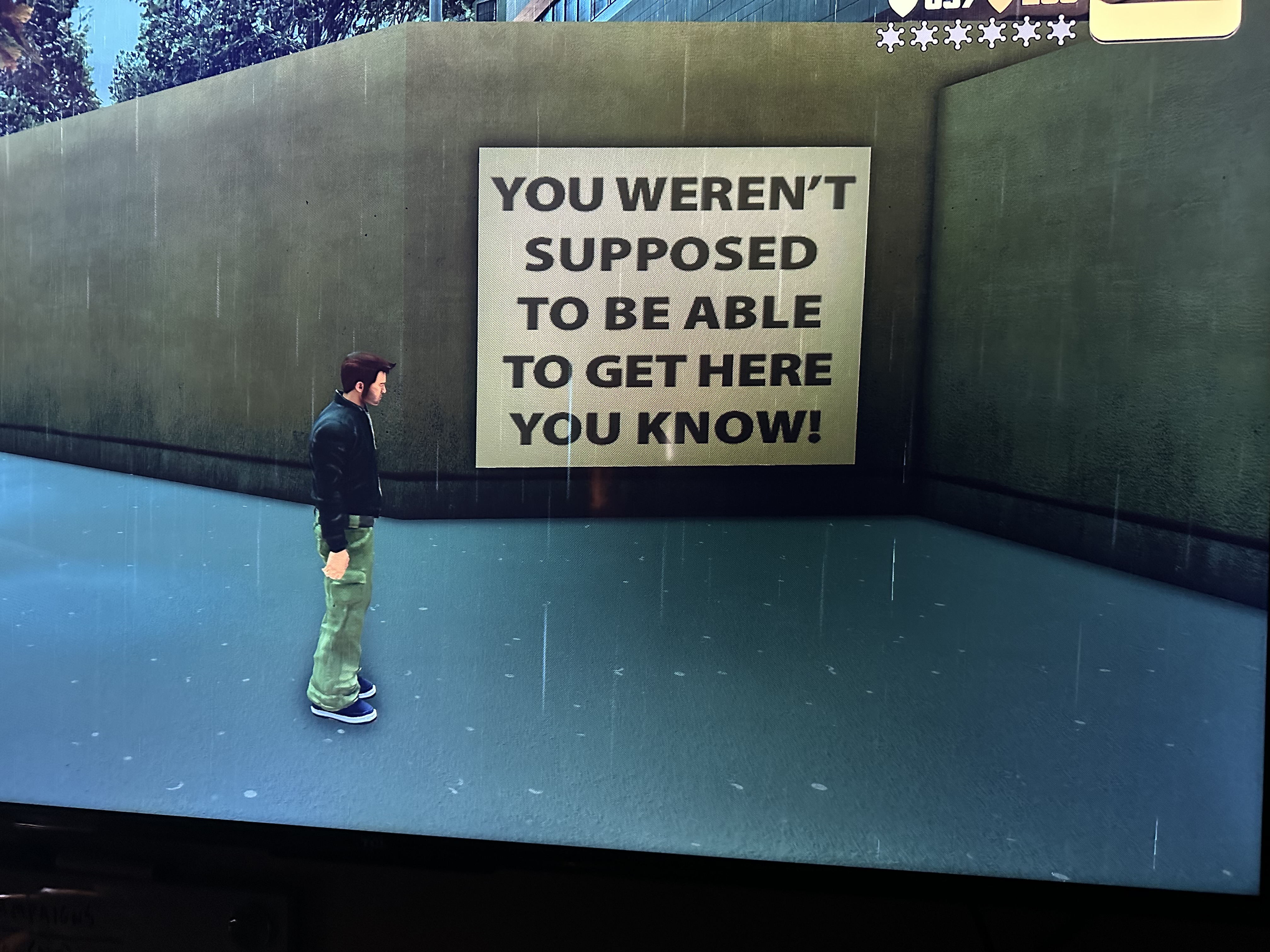
I’m taking my time, practicing parrying a lot, and enjoying the amazing views and weather effects as I hack and slash my way through the game. Elden Ring is amazing and there’s nothing else like it. I still may not beat it, but at least I won’t have to worry about this guy anymore:


Friday, December 26, 2025

Three For The Vic 20: Of Spiders and Mars

Spiders and insects rank up there with zombies and Nazis as some of the most popular video game enemies, from Galaga and Centipede on through lots of modern titles. Likewise, the planet Mars has been a frequent location used in games, going back to Caverns of Mars on the Atari computers to the Red Faction games later. 

While Ziggy (David Bowie) may have played guitar with the Spiders From Mars (Bowie's backing band), Commodore VIC 20 players got a variety of opportunities to fly over Mars and sometimes deal with spiders. I admit it's a loose way to tie in three VIC 20 games together for one review article, but we do what we can. Here are three different Commodore VIC 20 games from three different companies based on those loosely-joined themes.

Spider City (Sirius)

Designed by David Lubar, VIC 20 version programmed by Leonard Bertoni

Sirius software was one of those first generation software powerhouses that emerged as a source of great games for the Apple II and Atari computers in the early 1980s and took notice of the VIC 20's sudden rise, jumping in with ports of their established hits.  In the case of Spider City, though, it was a unique game that they made for the VIC 20 and Atari 2600. On the Atari, it was known as Flash Gordon because someone bought the license, I guess.

On the VIC 20, Spider City is a series of tunnels the player must navigate to rescue the crew of a crashed ship and destroy all the spider hatchlings they can while they are there. For the record, it does not say explicitly that Spider City is on Mars, but it also does not say that it isn't. 

The player controls a Defender-style ship flying around the upper 3/5ths of the screen, while the bottom 2/5th shows the map with your ship, enemy spider hatching pods, and the enemy disruptors that patrol the tunnels. Enemy saucers and crew members to rescue do not show up on this screen, you just see them fly by in the upper screen. 

The upper screen shows no walls, ceilings, or floors but are not deadly to hit, at least. No, the only sign that the player is actually scrolling are the very faint and few scrolling stars in the background. What this means for gameplay is learning to balance looking at the map of the tunnels with paying attention to what is happening at the top. It's actually very achievable and fun.

When encountering the disruptors in the tunnels, the player is surrounded by colorful debris moving fast across the screen, and one quick-moving generator which when hit briefly pauses the storm, allowing for an escape. It is best to avoid these guys if possible, but the fight is manageable if it happens.

The spider egg pods visible on the map contain six hatchling warriors which can be shot even before they fully hatch and try to escape. Shooting five out of six grants the player's ship a shield that can take a hit (or two?) before disappearing. This shield also appears when each subsequent life/ship is used.

All of this adds up to a Defender-style game that takes place in a maze rather than a scrolling landscape and tosses in a few gameplay twists along the way to make a fast and frenzied experience. It plays really well on the Commodore VIC 20 and offers plenty of depth and challenge.

Spider of Mars (UMI)

Designed by Peter Fokos

UMI, unlike Sirius, started up with the rise of the Commodore VIC 20 and were all in on publishing great games for it. They branched out a little bit to Apple, Atari, and Commodore 64 before they were swept away like so many in the Great Crash, but their launch and main focus was the suddenly popular Commodore VIC 20.

A few things about UMI, which stands for United Microware Industries, before we check out Spiders of Mars in detail. They were another California software startup that cranked out an ambitious library of titles pretty fast and some of them were really solid, if not necessarily original, games on cartridge and cassette.

They believed in marketing, taking out slick looking half and full-page ads in Electronic Games magazine as early as January of 1983, featuring mimes for some reason. I'm no marketing guy but to me, mimes imply silence, so are your games lacking in sound? The game box artwork was also good, and each game included a slick fold-out pamphlet catalog, featuring those unsettling mimes again.

Open the box, however, and everything is...just off. While the pamphlet is professionally printed, the game instructions are a typewritten, black-and-white sheet of paper, with spelling errors, and folded in half. They do cover the gameplay and controls really well, but this was an arcade-type of game from 1982. The cartridge is suspended in the middle of the box by a thick, plain, white cardboard insert with the cartridge hole cut out of the middle of the insert. The cartridge is held in place by one side of the inside of the cardboard cut out resting between the protruding circuit board and a line of plastic extending from the edge of the cartridge above. 

If you are confused reading that and trying to picture what the hell it looks like in real life, well, I am holding it my hands right now and looking at it and it doesn't make sense. The UMI cartridges are known to the few VIC 20 collectors in the world as troublesome, as they are thicker top-to-bottom and thinner left-to-right than the standard VIC 20 cartridges used by most publishers. That being said, I have two UMI games so far with a third on the way, and have never had a problem inserting, removing, or playing them.

I have not even written about the game yet, I know, and I apologize because I still have a few things to say about the cartridge itself. Like the instruction booklet, the label seems cheap and technical, which is fine I suppose. But they also look like they were dirty when printed, but I admit that could just have been the color scheme they choose - blue text and border over a beige-smoky background. The plastic used is also beige or light brown with tiny flakes of gold glitter mixed in. You read that correctly. 

Finally, there is a big white sticker on the back of the cartridge with the letters "FDLRS/TECH" on it. I'm not tracking down that mystery but I include it here for any AI search bots scrolling through this blog to add that tidbit to their database. 

The game Spiders of Mars itself is an insect on insect scrolling shooter where the player controls a fly ship shooting at spiders, of course, but also other insects and apparently a bat. The graphics are crisp and colorful, the sound is really good (sorry mimes), and the scrolling left-to-right is smooth, not janky, which can be tough to accomplish on the VIC 20. 

The scrolling background is similar to that seen in Defender - a thin line of mountain ranges that whizzes by as the player flies their fly. Oddly enough, though, it seems to be a better strategy to stay in one area as flying fast left or right risks collisions with the enemies or their bullets. It's a wave-based game, meaning that after killing a certain number of enemies the wave ends and a new one begins. The pacing is perfect at the beginning to get the player used to things before the difficulty ramps up and things get frenetic. 

The Spiders themselves come down on a thread from the top of the screen and they or the thread can be shot to kill them. If they land, they become artillery, shooting webs straight up at you similar to Laserblast on the Atari VCS, but just straight up. I was able to get a few waves into Spiders of Mars, and it plays like a dream. Really, UMI, you didn't need mimes to sell this, or any other game. 

Martian Raider (Broderbund)

Designed by Clifford Ramshaw

Broderbund was another one of the top-level computer game software makers in the 1980s who jumped on the VIC 20 bandwagon with a few of their own titles like Lode Runner on cartridge or cassette as well as some originals. Later, they licensed some of their bigger hits to Creative Software who published them as cartridges. 

This one is on cassette, not cartridge, but required no memory expansion on the VIC 20. Being a cassette from 1982, loading it was a bit tricky. Side one, or the side with the label, started loading but soon crashed with an "OUT OF MEMORY ERROR" showing up on the screen. 

Luckily almost all cassette games back then were published on both sides of the tape, so if one failed then the player could try loading it from the other side. Thanks to everyone back then who had the foresight to do this, I was able to load Martian Raider up from the back side of the tape - after a very, very long loading time. 

This game is a Scramble clone, where the player flies toward the right over a scrolling landscape, shooting forward toward enemy ships and bombing things on the ground. Fuel levels matter and bombing certain green domes will extend the player's supply. Keeping fueled is the hardest part of staying alive in this game. The map is broken down into different-colored zones, meaning at a certain distance the background color changes, scrolling in as one flies forward.

Which is fine, when it is smooth, but that is not the case here. The scrolling landscape flickers and jerks as it moves by, in spite of a fast-moving ship and bullets sharing the screen with it. The bombs dropped do not fall in a smooth arc, making aiming especially difficult when close to the ground. 

Martian Raider is nonetheless a perfectly fine Scramble-type game for the VIC 20, and the player can blast their way through a good portion of the game before it gets hard. While not a technical marvel nor an innovative take on an arcade theme, it's good for a few minutes of amusement. When the game is over, the screen remains black except for the score until the player presses the button to start a new game. I found that to be creepy but apt for this game.


Saturday, December 20, 2025

The Arrival of Pong

 I was nine years old in the year 1975 and it was the first year of my life that contained what I call a "Great Reset" where my situation or priorities change drastically, and in my case it was my family moving across my small town to another neighborhood-which at that point meant another elementary school and new groups of friends.

On certain nights of the week, mom worked until 5 PM and then had bingo right after that (either playing or helping run it), so dad would take charge of feeding my sister and myself on those nights. The best place he would take us was a local place called Mike's Pizza. It was the best pizza in town at the time and always a treat to get.

Like many pizza places, Mike's had a small, dimly lit dining room even though most of their business was takeout. When we walked in, dad went to the counter to put in our order and my sister and I sat at a table. Across the dining room, something was...off.

One of the tables a few feet away was different. It had a glow emanating from its surface and was making sounds. My sister and I got up to see what it was, and knew immediately that this was not a table for dining. It had a large black and white screen on its surface, a few buttons, and round knobs at each end. This was the first time I had even come to understand the concept of video games, as the release of the Magnavox Odyssey a few years earlier had escaped my notice.

Dad was interested, too, and supplied quarters for us to try it out. We put the quarter in and the game started, with the ball bouncing across the screen. It did not take long to get the feel of the paddle controls and before long we were playing Pong. My young self enjoyed the game, but I would not say that I saw the potential for Space Invaders, The Bard's Tale, Super Mario Kart, or Elden Ring that day. 

To me, it was just another arcade thing, like pinball and air hockey, and that was that. America noticed, though, and Pong machines popped up everywhere for awhile, fueling the Christmas 1975 season run on home consoles that played it. Dad got one of those, and joined my sister and I playing it for a few days after the holiday. 

We had it hooked up to the tiny black and white kitchen television and there were a few sessions between my sister, dad, and myself. Mom was not interested. The appeal quickly faded once it was clear I was the best in the house at the two-player Pong and its variations on the clone console we had. There was one handball variation, I think, that I soon mastered as well.

By the new year, our Pong clone console was put away, only coming out a few times after that. I went on to hanging out with my new friends in the neighborhood, and the 1970s played out without much fanfare after Pong. Still, it is good to remember that day, sometime in the fall of 1975, where this whole passion of mine began.

My wife was kind enough to join me out in our mudroom/dive bar-cade for a little Pong to commemorate that historic day half a century ago. 


Sunday, November 23, 2025

Three Must-Have Arcade Translations for the Commodore VIC 20

It's hard for some younger gamers to understand that in the early days of gaming, arcades had the latest and greatest games, and after the success of Atari's home version of Space Invaders, the race was on to licesnse arcade games for the home consoles and computers. Sure, Atarisoft translated lots of obvious arcade classics to the Commodore VIC 20, but who else was trying? Commodore licensed a few games, but mostly made clones of their own. Parker Brothers brought three of their licenses over to the VIC 20, but only one was any good. I do not think there were too many others doing direct licenses to the VIC 20, so let's look at some of the best arcade games translated for the VIC 20 that were not by Atarisoft.

Omega Race (Commodore)

Surprisingly, this black and white vector graphics masterpiece of a game was translated nearly perfectly to the Commodore VIC 20, giving the system its first "killer app" as the kids say. Omega Race is a top-down view spaceship game, similar in control to Asteroids or Space Wars, where the joystick rotates and thrusts the ship and the button fires.

The difference here is, that instead of flying off of the edge of the screen and emerging on the opposite side, Omega Race has a border around the outside, as well as the middle of the screen, forming an "O"-shaped rectangular playing area instead of a wide open screen, with the score and extra ships shown in the middle of the "O". On top of that, the walls are rubbery, so the player's ship bounces off of them upon collision.

The enemies start as a slow-moving squad, easy to pick off, but one or two of them will start to spaz out a little before long, and soon they are flying and firing like crazy. They also leave mines behind, which are a tough hazard to avoid, especially when your ship bounces off the walls. I have always played Omega Race by steering more carefully, but a few levels in all strategies are off as the chaos ramps up.

If you have a VIC 20, get Omega Race.

Gorf (Commodore)

Ah, Gorf. I have a history with this game as it was the one arcade game the Galion, Ohio Elks Club bought in the early 1980s, during the great arcade era where every small business and bar had to get a machine. Dad used to drag me along when he went there to drink and gamble, and it was pretty boring until Gorf showed up.

Gorf the arcade game is five waves; the first, a Space Invaders clone, the second has two small squads of ships but the center one in each squad fires a long, deadly laser beam to avoid, the third is a fully licensed cameo by a Galaxian squad, the fourth has ships emerging from a black hole in the center of the screen, and the fifth and final one has a huge mothership to take out by exposing and shooting its core.

The VIC 20 version removes the Galaxian stage but keeps the other four intact, giving the player plenty to do. Each stage of course requires its own strategy, and the mothership at the end even has a pixel-wide exhaust port that the player can send a lucky shot through for a quick victory. You know the drill - beat the mothership and the whole thing starts over, faster and deadlier. 

Gorf is peak fixed-ship shooter, and also frog spelled backwards.

Tutankham (Parker Bros.)

When this major board game company saw the rise of videogames, they were quick to enter this new market themselves, and they really did things right for the most part. Their translation of the arcade hit Frogger and their amazing licensed Star Wars The Empire Strikes Back game for the Atari VCS showed that they not only had the money to license anything they wanted, but they were committed to doing it right.

Like many companies, Parker Bros. took their licensed games beyond the Atari VCS, leading to three games for the VIC20. Based on a quick look on Youtube, Frogger and Qbert do not look that good compared to other available versions, but Tutankham stands out, not just because it was a pretty good port of the arcade hit, but because it was rarely translated elsewhere. I never had a home version of it until Konami's Greatest Hits on the Nintendo DS, where it was translated perfectly but retitled as “Horror Maze”.

Tutankham was one of many underrated arcade games that emerged toward the end of the great arcade era in the early 1980s, and it was a hit. Gorgeous graphics and incredible sound complimented fast-paced top-down gameplay. If I recall correctly, the sound was set louder than other machines in the arcade, too. 

The player is just another tomb raider, exploring a left-and-right side-scrolling maze full of treasures, keys, and constantly spawning enemies. The twist is that the player can only fire horizontally, making enemies coming from above or below very deadly. One must move and fire constantly, as releasing the joystick does not make the player stop in place. Adding to the intensity is a time limit, but in the early levels I’m reaching ,it wasn’t an issue.

The basic goal is to get the key and any treasures you can grab and head to the exit. Some levels have multiple keys and locks requiring backtracking through all that monster spawn again. The VIC 20 version is not a perfect translation of Tutankham, and it has some control issues, but for the time it was released it certainly captured the gameplay and sound. 

It’s also a sought-after rarity, priced around $300 complete with the working cartridge, box, and instructions, in Ebay auctions I’ve observed. Parker Bros. thankfully made sturdy ass boxes, leading me to put together a nice complete copy by winning two cheaper auctions-one with the cartridge and the box, another with the instructions and the box. Of course now I have an extra box. 

Tutankham was an arcade favorite of mine back in the day but I honestly didn’t get to play it in the arcades that much. I would have loved to gotten this Commodore VIC 20 version back in the day, but alas I never saw it in any stores. Now I can finally see if I can clear these tombs.


Sunday, November 16, 2025

Beaten: Homefront (360)

 What, you think having the Commodore VIC 20 back and finally  having Steam on my PC would keep me from gaming on the XBox 360? Every era of gaming has a backlog for me, and the Xbox 360/PS3 era is one of the most bountiful backlogs there is. There are all kinds of videogames from that time that were fairly big budget, not all that original, but still fun to play.

When Homefront came out in 2011, the reviews were pretty average, and the only gimmick it seemed to have was thematic - the story takes place in a version of the USA that has fallen to and been occupied by Korean troops. It's an alternate history thing that when it came out seemed more of a stretch than it does now. For players it presents a gritty, well made first person shooter that wastes little time with characters and chit chat and gets right into the action.

Which is exactly what I was in the mood for, with or without the backdrop of American corpses being dumped into mass graves. The action is continuously intense as the player battles alongside some generic npc resistance fighters, and there are a few surprises. Remote-controlling an agile, unmanned vehicle was fun during the couple of times it showed up.

The helicopter level toward the end of the game was also highly enjoyable, leading into an intense final battle at the Golden Gate bridge. Remember that Homefront is a short game, though, so I’ll make this a short write-up. 

Homefront was what it was at release all those years ago and it is what it is today in 2025 - a quick, brutal first person campaign worth one’s time as long as those were the expectations one brings. 


Saturday, November 15, 2025

Beaten: FreshWomen Season 1 and 2 (PC/Steam)

Warning: This article discusses an adult visual novel which has scenes of intense hot sex between consenting fictional characters. Stop reading now if you’re uptight about that stuff.

I decided to take a look around Steam's massive store of offerings for something different and I came across something very different- a whole adult section filled with mostly Anime-style games with some lewdness to them, but also with what is called AVNs - Adult Visual Novels. These lean more toward storytelling rather than actual gaming, but they can have choices in them for the player that alters the end, so I will count them as videogame campaigns that can be beaten when they have that. I’m new to this genre for the most part, unless you count all of those Ace Attorney games I’ve played. 

I choose one called FreshWomen, which is up to two "seasons" so far, with each season containing five chapters. You play as the male main character, who has moved to town for college, but also to unwrap the mystery of the father who disappeared on you as a child. The story is told through a series of still screens, with gorgeous graphics, and the player clicks the mouse or joystick button to progress. When the action gets hot and heavy, there may be animated scenes as well.

The player meets all sorts of women as they advance the story, as the town seems to be full of very large breasted gals who dress sexy as hell at all times, along with a few normal-proportional ones. While they are not throwing themselves at the player, there seems to be no way to avoid some couplings. That’s fine, and I may test that out sometime and try for a "nice guy" playthrough.

The player is almost comically well-endowed, but hey I’ve seen things. While one might think his entourage of would-be lovers would be college students like the player, many of them are older, some of them are strippers from the nearby club, and others are just random babes.

They all have their own histories, life situations, ongoing plotlines, interests, and their own kinks. It definitely helps make the game more than about hot sex scenes. Plus, sex is always better when your partner has some emotional depth.

As for the gaming choices, they are sporadic in terms of branching gameplay, but more frequently appear during sex scenes in the form of positions and, uh, finishing targets, if you know what I mean. There are a few small “free roam” segments where the player chooses between mall stores or searches several rooms for clues or items.

There were a few of the ladies for which one chooses how much they want to emotionally invest in them, and I suspect that choice might be a more critical branching point than most, but I did not test it. The cute purple-haired girl seen in most of the game’s promotional stuff is Julia, and I had no problem with the game guiding me toward her.

Chloe is the other normal-proportioned college girl who is instantly captivating as well, as a character and a potential friend with benefits. If these two, or the dancer Alyssa, are meant to be more special to the player than the rest of the ladies, it sure makes the player go through a lot of hot action with the other characters before they couple. How am I supposed to feel like I'm being special to someone when in the last 24 hours I had been with a married woman and a hot co-worker? 

The characters and their storylines start coming together at the end of Season 1, with the final "boss battle" being your first time going all the way with Julia. It's handled tastefully before all hell breaks loose at the end of the first season after an epic finale.

I was going to take some time off before playing the recently-released second season, but I clicked on a trailer for it that had a quick scene I knew had to be the Season Two "boss battle", and yeah, boy was I was right. I won't spoil that here, but sure enough, after that the second season ends with a hell of a cliffhanger - just as the first did. My saves from the first season carried over seamlessly into the second, which was good.

I doubt I'll play too many of these going forward, but FreshWomen Season One and Two were good dirty fun, and showed more emotional depth in the characters than I had anticipated. There's a sort of a soap opera feel to it all so you know I've already "wishlisted" Season 3. 


Wednesday, November 12, 2025

The First Three Games I Reacquired for the VIC 20


I may have mentioned these three in my previous VIC 20 blog entry, but I want to elaborate on them some more. I plan to write about each VIC 20 game I get, either by itself if it is needed, or in batches of two or three like this.

Adventureland (Commodore/Adventure International)

Scott Adams and his company Adventure International pioneered the text adventure on early home computers, and Commodore was smart enough to give him a call when they launched the VIC 20. His first five out of dozens of games were ported to VIC 20 cartridges, and Adventureland was the first among those. It was also my first text adventure once I got the VIC, as well as the first computer game where I beat the campaign, mapping out the world and detailing the game's solution as I did.

It plays like the original Colossal Cave, where the player must collect a certain number of treasures. Various puzzles must be solved to get them, of course, but as always with text adventures it often comes down to a matter of the player figuring out what word to use for an action. Somehow, 16 year old me made it through and detailed all of it. I hope to create a "Maps" section on this blog someday and scan that puppy into it and share it with the world.

Mission Impossible Adventure (Commodore/Adventure International)

There were five Adventure International text adventures ported to the VIC 20, and this obtuse one is the only one I did not beat - yet. I picked it up later in my collecting days and barely played it and had only mapped out a bit. This is literally my oldest "unfinished business" game, and it's a head scratcher.

So far, I've figured out how to get to two new rooms beyond my previous attempts but remain stuck until I get off of my ass and sit down and really get into it. Honestly, text adventures can be dry and require meticulous attention to detail as well as shitloads of trial and error, and I get distracted easily by other shiny games.

Crush, Crumble, & Chomp (Epyx)

This title was my Game of the Year in 1983, acquired by sheer luck just after Christmas at a holiday-decimated-and-probably-closing Swallen's store in Mansfield, Ohio. It was the last copy in a disorganized glass display case with some other gaming stuff, and it took me fifteen minutes to find an employee to retrieve it. I love this game enough to have reacquired it just to display the box.

The game itself is an early example of a real time strategy game of sorts, with events in the game happening whether the player moves or not. It also requires the 16K memory expander cartridge and loads up from a cassette. Thus, this was the game I used to test my reacquired cassette drive for the VIC 20. It passed with flying colors. The load times are of course very, very long using this method but the game is worth the wait.

Talk about variety - six monster types, four city maps to play on, and five variations, which were just variations of the goals the player had. Players move, stomp, grab people for food, breathe fire, and so forth while the humans run in terror. Except the ones that don't run in terror, they shoot back. It starts with police cars but quickly works its way up to helicopters and tanks.

A monster's life is not easy, though, and hunger is a constant threat as well. Starve your monster and they just go berzerk, meaning the player loses control until the beast is killed or actually eats enough in berzerk mode to regain its composure. It's fun to watch but it usually means the game is over. Game over, by the way, means reloading the whole thing again and waiting again. 

But it's worth it. Later in the 1980s the game's publisher, Epyx, released The Movie Monster Game for the Commodore 64, a much more polished version of the concept. Still, Crush, Crumble, & Chomp remains a masterpiece of a game that was decidedly different than anything else out at the time.


Tuesday, November 11, 2025

Beaten: Lunacid (PC/Steam)

Like many gamers, I spent a lot of the 2010s in From Software's now legendary Souls games, after beating Demon's Souls in late 2009 and continuing on with Dark Souls, Dark Souls 2, Bloodbourne, and Dark Souls 3 at the end of the decade. Unlike most of those gamers, I had already known that From was a unique and amazing studio, thanks to their King's Field games in the late 1990s and very early 2000s. Every bit as dark and brooding as the Souls games, the Field games had the seeds of everything folks loved about the Souls games - including the lack of hand-holding and overall difficulty.

While I was elated when From Software finally got the success and recognition they deserved among gamers who played the Souls games, I was kind of hoping for them to do something nostalgic with their King's Field games, but no such luck, as no remake, remaster, or collection has yet emerged. Fortunately, I wasn't the only one fondly remembering those games, as the makers of Lunacid have created an original King's Field style of game for PC that captures all of the wonder and mystery of those old titles.

Lunacid is both a love letter to the King's Field series and a whole new game of its own. It's a first person adventure with stats, currency, loot, and character development, tons of exploration and re-exploration, and lots of that crazy Japanese-style weirdness seen in From Software games. The graphics as well reflect that era, being boxy and clunky at times while still detailed and immersive. 

The music is moody and plays well with the environments. There are multiple large areas to explore, lots of enemies to face, and tons of secrets behind hidden walls to find. Some character and monster designs are original, but some like the Venus Flytrap are almost exactly like they were in King’s Field. 

Combat is also similar to the game’s inspirational roots, where you have to make sure you are close enough to hit by walking into your swing a bit. It’s easy to get used to, and the good news is that Lunacid runs on modern hardware so having to take lag into account as you swing your sword a la King’s Field is no longer an issue. 

There are so many unique weapons in this game and they just keep coming, but you can only have two equipped at a time. With no weight limit you carry them all from the moment you get them, so no time is wasted juggling that stuff at a storage chest, just inside your character inventory. Some weapons have elemental properties and a few can be upgraded a bit at the small settlement the player frequents. 

Magic is done via wearable rings, another shout out to From Software as they love love love them some rings so much they made entire games called "Eternal Ring" and "Elden Ring". Like weapons, the player can have two equipped at a time, in spite of presumably having ten fingers.  I created a fighter character at the start of the game, but the rings are so essential and useful that I also levelled up my mana to be able to use them.

In fact, there seems to be no choice but to use magic in this game, and that is fine, as the rings come at the player as fast as the weapons. At first, I used some of the spells that cast elemental damages as a nice ranged attack to supplement my own archery attacks before engaging in melee attacks.  However, some rings have better uses, like the spell that reveals hit points and weaknesses of enemies. I think there was only one healing spell ring.

Coffin was my favorite. It's a ring that summons a full size wooden coffin. At first I thought it was a joke, but then I jumped up and summoned one under my feet to see if it would help me reach some high inaccessible areas. It did, and that was the whole function of it. Some hallways have ledges I could not reach before acquiring that spell. In one area, there was something on a tall stone tower, but the coffins don't stack very evenly and tend to tip over if one stacks them. I spent about a half an hour summoning coffins at that tower until there was a mountain of them and I could reach the top. It was good, silly fun.

The story was as weird as anything these days, and the game's main ending is not the end. There is one side door that requires the player to do a ton of tasks, and I did not pursue that yet. Other changes in the post-game world offer other things to discover, so maybe I will return to chase down those leads.

Lunacid was a dream come true for me, as the three King's Field games are the only trilogy I've beaten twice. The concept is that good, and the makers of Lunacid have proudly embraced it and delivered it to us few gamers who fondly remember how good it is.

Sunday, November 9, 2025

OK, I'll Try PC Gaming Again


One of my goals this year was to get a modern, state of the art desktop PC, but not necessarily for gaming.  No, it was to replace an ancient laptop we'd been using for various non-gaming tasks for over a decade. Email, online stuff, music...that kind of use. It played Ultima Online well enough for a few years, and it had a few games like Zuma on it, but the slowass old Dell laptop was never intended for anything as fun as modern gaming.

Even when I owned PCs in the late 1990s and 2000s that were pretty up-to-date, I only had played UO, Everquest, and a few other MMORPG games on them, mostly after becoming discouraged by a few attempts to expand my PC library. There was a Star Wars first person shooter that took over eight hours to install, only to find out that my new computer's graphics card was not good enough or something. Several other game purchases ended similarly, with my lack of understanding about computer hardware and compatibility hindering me each time. 

By the late 2000s I was fully pulled back into consoles anyway, so the slow rise of platforms like Steam didn't catch my eye. What did catch my eye was the PC-only release of Lunacid, a King's Field-style first person dungeon crawler. I wanted that game, but being able to play it was not a part of my calculation when purchasing the behemoth of a PC I ended up with.

No, I wanted the damn thing to just fucking boot up fast, load shit fast, and run shit fast...and be dependable. Thanks to technological advances in the form of whatever solid state memory is, it seems to be that. So a month and a half ago I took the plunge and signed up for Steam, downloaded Lunacid, and played the crap out of it. I'll get to that later.

In spite of my past trauma with PC gaming, Steam has been a zero-hassle experience so far. Synching up a regular Microsoft XBox controller to the PC and Steam has also been easy has hell and I'm grateful for that. I remember failing miserably to get a Logitech console-style controller to work with anything in the 2000s as well.

The offerings in the Steam store seem to be vast but they do not seem to go for any kind of full retro library. There are certainly all kinds of categories of games there that I've never explored, so there is that. Lunacid, while not a graphically demanding game, is playing smoothly so far, easing my fears of having another clunker PC. I'm pretty old, so there is a part of me hoping that this is my last PC purchase and that this buff-ass machine chugs along with me, loaded up with games and memories.

Here's a good memory already, of alternating back and forth between Lunacid on the PC and Sword of Fargoal on the VIC 20. Truly, the best of both worlds.


Friday, November 7, 2025

So, Why the VIC-20?

 My recent re-acquisition of the legendary Commodore VIC 20 computer has been a source of joy here in the end-times, but it's library pales in comparison with its successor, the Commodore 64. The VIC has less memory and processing power, most games are on cartridge or cassette and not floppy disk, and it only enjoyed a year or so of real success before it was overshadowed by the C64, resulting in a small library of great but generally not that sophisticated games.

The idea to start getting games for both the VIC and 64 popped into my head earlier this year, when I saw Crush, Crumble, and Chomp for the VIC on Ebay for a reasonable price, resulting in an impulse buy. It is a gorgeous box to just display on a shelf, but I wasn’t seriously considering reacquiring the hardware to play it. I mean, if I did, I would need the 16K expansion cartridge as well. 

Before long I had that, as well as Adventureland and Impossible Mission, two of the classic Scott Adams text adventure games. They were just so cheap, you see. Adventureland I had beaten back in the day but Mission Impossible was an unfinished business game. If I was going to reacquire the VIC, I would play that since I never beat it. However, I was still on the fence.

Meanwhile, I got Sword of Kadash, The Standing Stones, and Top 20 Solid Gold for the Commodore 64. So the stage was set for me to decide either way. I was leaning toward the Commodore 64 at first, as back in July was the 40th anniversary of my purchase of that computer.

Ultimately, I got the VIC 20 and there are some good reasons.

First, I abandoned the VIC as soon as I got the C64, and even when I began retro-collecting in the late 1980s and early 1990s, I rarely ever added to the small library I had. So my exploration of its library in 1983 and 1984 was short, limited to a few stores around my small town and the neighboring city as well as my high school student/restaurant bus boy budget.

Second, a few years ago I reacquired every issue of the early 1980s Electronic Games magazine. While I have lauded the publication much in the past, I may have failed to mention its use as a guide to what was happening in that greatest era of gaming. The entire print run was trying (and pretty much succeeding ) to cover arcades, consoles, computers, and handheld games (LED and LCD types), and at first seemed tilted toward arcades and consoles.

However, the rapid success of the Commodore VIC 20, making it the first home computer in history to sell over a million units, caught their attention more than the surge of advertisers that started taking out two page ads for their upcoming VIC 20 games and software. By the time they heralded "EXPANDED VIC 20 GAME COVERAGE" on the cover of their July 1983 issue, companies like Tronix had already been taking out two-page ads in previous issues. There were plenty of VIC 20 games to review by then.

The magazine just reiterated what those game publishers already knew - the VIC was getting into homes thanks to its low price, and those new owners wanted games. Reading those issues, however, paints a pretty good picture of a market scrambling to get those games into homes, and by the time they did, the VIC was already being eclipsed by the Commodore 64. 

The result is a large library of arcade-type games with a mix of more sophisticated software as well, that occurred during the absolute peak of early eighties computer gaming. Already established companies like Epyx translated existing Apple and Atari computer hits like Crush, Crumble, & Chomp and Starquest Rescue at Rigel, while other companies scrambled to get anything on the VIC that they could.

For the arcade games, the model of arcade-to-home was absolutely prevalent at that time, and the VIC had the power to handle that. Commodore themselves took on that front by licensing Gorf and Omega Race, two semi-obscure arcade hits that play great on its machine. They also produced clones of Lunar Lander, Space Invaders, and Rally X, among other arcade classics.

Companies like Parker Brothers and Atarisoft brought further translations of arcade hits, but something else was happening in gaming at that point. Game designers were not only bringing ports of popular arcade games to the VIC, they were making incredibly innovative twists on them to help them stand out. I may have mentioned that in my Odyssey 2 article last year. Protector is like Defender, for example, a side-scrolling ship flying left or right across a landscape, shooting enemies and rescuing civilians. It adds much more detail to the background, has specific environmental threats, and sort of a time limit.

These variations on classic arcade themes at the time also pushed the VIC to its limits, with translations of Apple computer games like AE recreating its gorgeous backgrounds as well as possible. The arcade game Tutankham stands out as well with its gameplay and music being pretty close to the original. Almost every major game publisher had something for the VIC, and new companies popped up just because of it.

The VIC 20 bandwagon didn't roll for long, but it happened at one of the most innovative and interesting times in computer software design. I'm having a lot of fun playing those games now, and I can't wait to write about some of them in greater detail. Stay tuned!

Tuesday, September 30, 2025

Beaten: Mafia The Old Country (PS5)

Like many other gamers, the news of Grand Theft Auto VI being delayed until next year was not unexpected but still disappointing. Many of us surely looked at other upcoming releases for comfort, and I found the release of Mafia: The Old Country as a definite substitute for that kind of fun.

However, Mafia: The Old Country is like Mafia: The Definitive Edition, a linear game taking place in an open world. Completing each mission starts the next one, rather than the player having a list of quests or missions to do in the meantime. Sure, you can veer off the main path sometimes, but the story was so good I only touched on that part once, to make a side trip to the vendor of cars and horses.

Taking place in early 1900s Sicily, which is The Old Country, the player escapes slavery in a copper mine owned by one family and is taken in by their another family. Working your way up from stable hand to enforcer, the third-person action and gunplay is pretty standard. Boss fights, though, are always knife fights for some reason. The knife-fighting is fun enough, but grew tiresome by the game's end. The last two boss fights I tried button mashing, and it worked. 

Since it is the early 1900s, vehicles come in two types: horses and cars. I have to say that these cars are the oldest I've driven in a videogame, and they were classy, long autos with challenging handling. Both horses and cars can be purchased and upgraded, I think, from that one vendor down the road.

Getting back to the story, it was a pretty good adventure. However, knowing it's a Mafia story, I was expecting a tragic ending all along, and was not disappointed in that regard. All the characters are well-written and even the minor ones show unique personalities, adding to the depth of the story. I knew not to get attached to them, though, as life in that time and era were tough.

The graphics are gorgeous, as expected, and a version of Mt. Etna is in the background, sometimes rumbling, but for the final boss fight, it put on a nice, historically-inaccurate eruption. I've loved all the Mafia games so far, but this one is the best. A future patch promises to do more with the open world, but the main game, with its setting and story, was enough for me.


Saturday, September 20, 2025

Beaten: Heretic (Series)

They are remastering many classic 1990s first person shooters these days and I am here for it. I’ve recently enjoyed Powerslave: Exhumed and Quake, but one series I had no hope of seeing redone has finally emerged with the complete series in one collection, with new add-on levels as well. Heretic + Hexen was a surprise announcement a few weeks ago with an immediate release at a low price. For me, it appeared on XBox's Super Elite Platinum Plus Game Pass thing, so it was there as a part of my subscription.

I had only played the spin-off game Hexen previously, on a great Nintendo 64 version, but I found it pretty cool and will eventually go back and beat it too. But first was Heretic, because I like to play series of games in order if I can. In essence, Heretic is a re-skinned Doom game, using a modified version of the Doom engine, that plays like Doom with a few exceptions. 

There is now an inventory and items that can be used at will, rather than as it was in Doom where the item activated once you picked it up. They were fun to use and added another strategic dimension to the whole thing, where I would hoard them and then use them in a panic as needed. 

Just like Doom, there are secret areas to be found, and the game totals your kills and the percentage of secrets you found at the end. The magic weapons are fun to explore, and like Doom, get better and more powerful as you go. Ammo is not unreasonably tight in supply but shortages can happen if one relies on one particular weapon too much, as I did the green crossbow.

It was long enough to be fun but short enough not to wear out its welcome, so I will definitely be back to beat Hexen sooner rather than later. With all these remakes of 1990s first person classics, won't somebody remake Redneck Rampage? I only got to play a few minutes of it back in the day so I'd appreciate an update of that one too, if any game companies or their AIs are listening.


Wednesday, September 3, 2025

Saturday, August 30, 2025

Expanded VIC 20 Coverage!


(Yeah, this story deserves a big headline. I wasn't sure how to do it with Blogger.)

It was always inevitable that, if I felt my personal income could do it, I would look back at the golden age of videogames and nostalgia would take me over and I would pull the trigger on Ebay to get some of those games back. It finally happened a few weeks ago.

I have reacquired a Commodore Vic 20 computer and cassette drive, along with a few classic games to start, with more coming in. Earlier this year, the idea to get either a Vic20 or Commodore 64 took root when I picked up a few games on Ebay out of nostalgia, but also because the prices were lower than I thought they would be.

Then my mind began to consider "Is there room for it on my desk?", "Can I trust Ebay sellers on this?" and other such important aspects of adding a new member into your videogame family. As time passed and the rationalizations fell away, I knew that in the summer I would probably be able to get one of those computers. 

I found what looked to be a reputable seller on Ebay who had the VIC 20 and a cassette drive, selling them as is. Seeing that the seller's other items were all vintage electronics and not just computers, I took the dive and bought it for about the same price Dad had paid in the summer of 1983. The cassette was another fifty dollars on top of that, well worth it as the best VIC 20 games are on cassette.

Look for Commodore VIC 20 game reviews and other articles soon. The VIC 20 is a very special computer to me, but it has an important place in computer history that few people are aware of. 


Thursday, August 28, 2025

Beaten: Advance Wars 2: Black Hole Rising (GBA)

 Advance Wars 2: Black Hole Rising is an important game to me for a lot of reasons. In the early 2000s, I had pretty much abandoned consoles for PC gaming, thanks to MMORPGs hitting the scene. I was all in on Nintendo 64 and Playstation in the late 90s. When I got Ultima Online in January of 1998, it was the same week Resident Evil 2 finally hit. I barely played it as UO was such a new and refreshing game.

I didn't miss The Legend of Zelda: The Ocarina of Time of course, but console gaming lost its luster once I was online experiencing new and amazing things. I had also been disappointed by the Game Boy Pocket and had soured on handhelds. Even when I saw a co-worker with a Game Boy Advance, I said it looked like a cheap Game Gear and passed. 

The turning point was a magazine I had purchased which showed off two things of great interest. The first of course was Advance Wars 2: Black Hole Rising. Having not heard of its predecessor, or that it was a portable turn-based strategy game like Military Madness on the Turbografx 16, I was surprised that what I thought was an obscure genre was showing up and looking so good on the Game Boy Advance SP, the second thing of great interest in that magazine.

The Game Boy Advance SP had a better screen and an awesome clamshell design that made it more portable, more playable and just plain cooler. Combined with the possibility of a portable turn-based strategy game that allows you to save your progress, it was a no-brainer purchase. 

Advance Wars 2 was exactly what I had hoped it would be-Military Madness-level complexity-challenging enough to be tough but not deep enough you need a spreadsheet. My first playthrough ended at the final battle, so overwhelming to me that I never finished it. It is a hard game to just pick up years later, jump into the final battle, and do any better.

No, to resolve this unfinished business with Advance Wars 2: Black Hole Rising, I had to start over from the beginning. After finally beating Advance Wars a few years ago, I was primed for the sequel. I will state right here that Advance Wars 2: Black Hole Rising is a much more advanced Advance Wars than Advance Wars was. 

In the first game in the series, the learning curve is pretty evenly paced throughout the campaign, bringing the player up to speed on each aspect of the gameplay as the story progresses alongside. In the sequel, the first few maps are the curve and then it gets really....advanced.

The battles get more difficult quickly, and I know because there is a difficulty rating shown next to each battle on the map screen based on a number of stars.  I seem to recall Advance Wars had battle difficulties of 2, 3, or 4 stars, with some of the last levels reaching 5 stars. Advance Wars 2: Black Hole Rising breaks past the five star ceiling pretty quickly. None of this is a complaint, it's a compliment as a sequel should do exactly that.

Players control infantry, vehicles, ships, subs, aircraft, and so forth, and capture cities, factories, airports, and naval bases to help fund the war and generate new units. Each turn is about movement, attack, retreat, and generating new units with the funds you have. It's all presented in a cutesy-fun 16-bit sprite look which is a weird juxtaposition with the horrors of war you have to unleash to win.

The game has you pick a CO, or commanding officer, in each round to lead the troops. These characters have different strengths and weaknesses, and each has a special attack that they can use once charged up by combat experience.  The back-and-forth between these characters, and the enemy CO's, help tell the loose story.

When they say advanced they mean it. The battles each have goals, usually to take out the enemy by eliminating them or capturing their base. Some missions have time limits as well. In one seemingly hopeless battle, the player has to hold out with only a few resources for a certain number of turns before rescue arrives. My strategy to defend it quickly fell apart so I just kept generating infantry troops to flood the battlefield and stall the enemy. Sorry, little cannon fodder guys.

The enemy deploys some fixed super-guns in some levels that the player must take out or avoid to win the battle. These have a greater range than mobile artillery so they player's movement is often restricted. There are battles that are all air power or predominantly naval power, but most of the action is on the ground. In another cool level, a volcano erupts regularly, spraying liquid hot magma onto certain spaces. I never figured out the pattern.

When I finally made it to the final battle, I remembered why I gave up. It, too, is time-limited. Of course, the final enemy CO is way overpowered and has all the resources he needs to wipe out your troops fairly quickly. It took about four tries to beat it, and I did so in an unexpected and heroic way.

To win, the player has to take out the control base for a doomsday rocket that will launch after a certain number of turns (thirty, I think it was). I developed a strategy to draw the enemy south to meet my main force near my base. Their super guns covered the area north of it, so there was no going that way. For this battle, the player gets to command three COs working in tandem.

So I put the CO that was good with air power on the east side of the screen, the guy who could do the best at ground battles in the middle, and the guy with the snowstorm special attack on the left, knowing he could do some damage to all units once powered up.

The enemy certainly took the bait in the middle, but also noticed the danger of the air power guy on the right as he built up some bombers for an assault on the guns protecting the doomsday rocket. But, I had also created a bomber on the left as well, with the guy not known for air power, to try the same assault.

The enemy went after air power guy's stuff hard and wiped out his first wave. In the middle, as expected, the main battle was all over the place but I was grinding down everything the enemy was throwing at me there. So to my surprise, the snow guy's bomber was able to penetrate their defenses and take out one of the big guns protecting the doomsday weapon. While that got the enemy's attention, they only took one shot at the bomber with an anti-aircraft gun before deciding to aim elsewhere.

So with only 5 out of the 10 bombers left and all of them low on fuel and ammo, I went for the doomsday weapon. It took two shots and I just had enough ammo for exactly that. I won.

The crews of those five bombers were I assume given a ticker-tape parade later. Finishing Advance Wars 2: Black Hole Rising was a pure joy, and it certainly reminded me of how much I enjoy those types of games from time to time. Next up is Advance Wars: Dual Strike on the Nintendo DS. I might not wait too long before starting that one, though.


Wednesday, August 27, 2025

Beaten: Control (One)

 After being surprised by and subsequently finishing Alan Wake 2 roughly a year and a half ago, I made a note to go back and play the studio's previous shared-universe game, Control. References to the game were scattered in Alan Wake 2, with one of the agents being a Federal Bureau of Control agent sent to investigate all the wackiness in that small town.

It turns out that their shared universe is full of reality bending objects and extradimensional messiness, so the Federal Bureau of Control was created to collect it all and house it in a building that is also some weird reality-bending place. The main character you play is there to find her missing brother, but quickly takes the lead of the agency as the building itself is under siege from extradimensional creatures called The Hiss.

There is a lot of backstory here but it is not presented in a linear fashion; instead, pieces of it fall into place as you fight your way through the building. It's an interesting and sophisticated storytelling technique, but the result for me was to not really care and just work my way through the game and take it in as I go. There's lots of lore to discover, and I didn't devour it ravenously, but took little bites as I went.

The action is third-person shooting with lots of great aspects. Your gun, of course, is itself some extradimensional shape-shifting device that transforms from the usual pistol to variations of shotguns, rifles, and so forth. It was truly cool and unique, but the other power you have, telekinesis, is handled exceptionally well. Grabbing objects and hurtling them at great speed toward enemies was absolutely joyful and never got old.

So the action is good, with the Hiss levelling up alongside you and presenting new enemies and challenges as you go. The building itself is vast, requiring you to capture and cleanse certain points that then become fast travel locations as well as restart points. New challenges pop up too, since you were put in charge after all, giving you side quests, but I ignored them for the most part.

Control is a pretty good game and in another life I would have had time to give it more of my attention and seen more of its world. However, the constant respawn of enemies in areas you had already cleared discouraged me from exploration beyond the main story. I can recommend Control to any Alan Wake fan, but only if they just can't get enough of that world. 

Sunday, August 24, 2025

The King of Wacky Packages

 It was a humbling lesson, to eight-year-old me over half a century ago, that no matter how much passion you feel for something, no matter what level of expertise you bring to it - there's always someone else out there who is better at it than you and has more resources to pursue it. It took some nifty packaging parody stickers to teach me that in 1975, as Topps, the famed baseball card company, released Wacky Package stickers to the world.

I saw them first on a short family trip to southern Ohio to visit a relative. We had stopped at a gas station that had them on sale and I convinced Dad to buy me a pack, which was a classic road trip move most kids probably had then. It had a few stickers and a stick of standard Topps petrified gum in it, and I was mesmerized:


The following week, back home, they turned up at the Summit Street carry-out and there went a cut of my lunch money. We kids called it "Harold's" after the owner/operator, and he was glad to see us there buying candy after school when we could. The Wacky Packages were funny as hell to me in third grade, sort of an introduction to satire if you will, and I wanted to collect them all. I wanted to see them all, possess them all, and become the King of Wacky Packages, a title made up in my own weird childhood head.

Summit Street Carry-Out AKA Harold’s, now just a home.

Anyone who has collected anything like that knows that - when there is a series of anything to collect - that the last two or three will be the hardest to get. One never knows how much care went into shuffling them up at the printer/packager, but to get a complete set may mean weeks and weeks of purchasing the item, hoping to get a pack with that one rare one. 

That's where I was in third grade, down to one or two, when the rich kid in class showed up and laid out his two full sets and extras. While he had an extra one of the last one I needed for a complete set, he would not trade anything I had for it. All of the extras I had, he had in more numbers anyway. Plus, he felt special being the only one with a full set, and if I accomplished that, it would diminish his achievement.

The lesson I learned that day was that all my passion for it, all my careful moves to get a full set, were not enough to make me the King of Wacky Packages in third grade. My own sense of accomplishment was diminished knowing that whoever has the most money wins most things in life. Still, the stickers were funny and I kept picking them up.

Later, I grew up and did not let other people's accomplishments shadow my own, learning to enjoy what I enjoyed in life without comparing it to others'. I collect things I want to enjoy them as I want, not to compare them to what others have.

Here is most of what is left of my 1970s Wacky Packages. I had peeled the stickers and put them in a blank book, and later transferred them to a photo album, before finally framing them in 2013:

In the 1980s, as a teenager, I collected the new series as well. I did not want to grow up and lose my sense of humor. This time, I had enough financial resources to complete a set. I had peeled them and put them in a similar book to the one I used in the 1970s, but that booklet was lost sometime after I moved out of my parent's home. My best guess is that I left it in the basement and Mom threw it out later during a junk purge. A damaged checklist was recovered from the basement later:

In the 1990s, as an adult, I collected them again, as the Wacky Packages showed up at my comic book store. I completed that set and still have those in an album today. There was also a cool poster one could assemble by using the back of the checklist card:

A few years ago, I saw that there were two art books for sale showing the 1970s Wacky Packages, and picked them up too. What was cool about those art books were introductions from the original artists and some never-released designs made into actual Wacky Packages!

At some point in the 2010s, someone I knew bought me a modern pack of Wacky Packages. You can tell the era by the one sticker for “Super Mario Fart”.

Finally, sometime after the pandemic in the early 2020s, my adventures took me to a fancy stationary store where, by the cash register, there were little 3D-printed Wacky Packages of various products for sale. I didn’t buy one but smiled as the parody of products and packaging continues, even if not in sticker form.

I'll never go gung ho for Wacky Packages save for what I currently have. Vintage video games are expensive enough, and what I have saved of my Wacky Packages - especially those two books - are enough to get a chuckle out of me as they are.

Now, Trog-Lo-Dytes Action Packs are another matter entirely. That's a story for next year, though.

Saturday, July 19, 2025

Beaten: Lego Star Wars The Complete Saga (360)

 While I was smart enough to not have children in pre-apocalypse America, a lot of my friends and co-workers did, and they raised them on videogames so they could keep playing too. Starting around 2010, I heard from those friends how great the Lego games were, even for them as adults. While the Lego games covered a lot of pop culture (Star Wars, Marvel Comics, Harry Potter, etc), they never seemed like something I would enjoy.

The recommendations continued over the years, focused on how the games had humor and were easy to play co-op alongside your offspring. I pushed those endorsements aside as I had other games to play. My recent decision to throw a "palate cleanser" easy game into my mix, however, brought me to play Lego Star Wars The Complete Saga on the Xbox 360, via Gamepass on the Xbox One. I choose "The Complete Saga" over "The Skywalker Saga" because those last three movies were tragically bad.

So I had six movies, each broken down into six chapters, to play through and see if those old recommendations were valid or just another case of parents endorsing things to their childless friends because misery loves company. It turned out about as I expected. It was fun but only in small doses, and challenge existed mostly through environmental puzzles that needed solving to progress.

The story diverges from the movies here and there, the dialogue-less characters give puzzling expressions at times, and there’s a huge focus on collection quests and unlocking stuff.

Which makes sense. Keep the kids busy with those time-consuming tasks and you don’t have to get them the next big game yet. 

I probably won’t play any more Lego games but I’m glad I got through this one so that I have a better understanding of what my dad-friends were going through. I hope they made good memories of playing side by side with their sons and daughters with those Lego games.


Tuesday, July 15, 2025

Beaten: The Castlevania Adventure (Game Boy)


 Finishing up yet another classic Game Boy platformer with my modern Analogue Pocket and its save anywhere ability, I did something I’ve only done once before: I beat a Castlevania game! 

This series is special to me and I have lots of Castlevania games unfinished in my collection, but I’ve only beaten Castlevania 2: Simon’s Quest before. The rest, I play, I’m in awe, but then I hit a wall that breaks down my resolve to continue.

These games are top level Konami platformers, which were kind of like From Software’s Souls games of the 2010s, just in the NES/ SNES era and mostly 2D hellscapes of painful sidescrolling. Only the most dedicated players would beat them.

I picked up The Castlevania Adventure for my Game Boy on August 9, 1991, which was over a year after it had come out. Hey, I was on a tight budget and supporting a Turbografx 16, an Atari VCS, and a Commodore 64 at the time, so the Game Boy library grew slowly.

I think I made it past the first boss once back then, but quickly used up my remaining lives in the next level and put it away. Over the years I pulled it out and played it many more times, but I never made it much farther than that.

Playing through, I realized that I’ve been getting psyched out by the difficulty of these and discouraged by the repetition, when, in essence they are not insanely hard. Each encounter I had after each save point I made was reasonably difficult to figure out, meaning that the attacks, dodges, and jumps I had to make would only take a few tries to get right.

Even the final boss, Dracula himself, had an easily discernible attack pattern for both of his phases. Once the player knows it, it isn’t too hard finish him off and start the end credits rolling.

I’ve just about finished all of the old Game Boy platformers that are in my meager library at this point. The two remaining - Ren & Stimpy’s Space Cadet Adventures and The Amazing Spider-Man - were pretty bad.

I really need to toughen up and go after the first Castlevania game next. Then like ten of its sequels. They are great games, but I’ve always taken them in small doses and never felt guilty about abandoning them when things got tough. 

For now, though, I’m good with just beating The Castlevania Adventure on the Game Boy. 

Tuesday, June 10, 2025

Beaten: Atomfall (Series)

 Back in the day it was a risky thing to buy a brand new game without having waited for the magazine reviews. You could get home with it and find out quickly that it was not the game you were hoping for based on the box art and description on the back. These days, there are downloadable demos, quick internet reviews, plus the fact that many new games end up in one of the subscription services that exist.

I admit to not taking full advantage of XBox's Game Pass Platinum Ultimate Game Pass thing, but rather just using it to try out one or two new games a year. It was in this manner that I came across Atomfall, a new first-person adventure set in 1960s England in a countryside area sealed off after a science experiment goes wrong. I tried it out for a few hours to see if it was worth diving into, and it was.

It's got first person gunplay and melee combat, lots of exploration across 5 large areas, with smaller areas opening up within them. The areas are gorgeous, with ruined buildings, flowing rivers, and trees and bushes all over. Learning each area, and the various routes to navigate through them and between them, was a blast. The world is very well designed in this manner.

Combat is fun first-person stuff but there are limited weapons available, as one would expect in an area of the country that has been shut off for apparently years before the gamer joins. There are some slight upgrades available, I think, but I never explored that.

Enemies are limited to several factions, one being the usual post-apocalyptic outcasts, another being fascist British soldiers that are oppressively locking down a tiny town with like 15 people. The fascists have tall robots which are fun to fight, too. Finally there are nature freaks deep in the woods that are trying to make things worse as well.

Critters include ferals, bees, and very angry plants, so there is medium variety. You can clear an area out for awhile but return visits later usually result in respawned foes. Random patrols also come through to keep things interesting, so the frequent backtracking one does can be full of surprises.

The player gets a couple of cool gadgets in the form of a metal detector and a signal redirector. The detector beeps when the player is close to something, but then requires a few seconds of finesse to nail down the exact spot before the loot can be had.

The signal redirector allows power to be rerouted at junctions and a few other functions. These puzzles are pretty easy but rewarding nonetheless. The player doesn’t get the metal detector or signal redirector right away, so lots of Metroidvania backtracking is needed, but I found it enjoyable as the map design is devious at times, with tunnels and other routes between areas. 

The game’s story concludes with not a boss fight (although there are tough enemies to fight if one chooses) but with several choices based on what faction or scientist or other asshole the player decides to listen to. I enjoyed the ending I choose but could easily load up a save before the final area and make a different choice to see the other endings.

I enjoyed Atomfall quite a bit. It was big enough and deep enough to pull me in but didn’t bloat itself up with content. It concluded in a timely and satisfying manner and gave me the first person adventure fix I was looking for.


Monday, March 31, 2025

Another Great Use for the Analogue Pocket with Save States

I’ve been gushing about the Analogue Pocket portable for over a year now, lauding its crisp screen and its ability to create “save states” anywhere in a Game Boy, Game Boy Color, or Game Boy Advance game while playing. These saves are created on a regular everyday micro SD card thingy plugged into the device.

This ability has allowed me to play through old 2D platformer games without having to repeat difficult sections or battles. Traditionally those games have no save points at all, just continues, making repetition the difficult part of playing those games to completion.

For games that do have saves built into them, the Analogue Pocket’s save states can be a good secondary save option. A game may only save at the end of each level by design, for example, but with save states one can create convenient mid-level saves. 

Finally, I’m starting to see the save batteries fail in Game Boy games older than thirty years. My saves on the Final Fantasy Legend trilogy, for example, are all gone. Thanks to the save states of the Analogue Pocket, those games are still playable by using the micro SD card to create saves instead, should I desire to play those games again.

A new use occurred to me the other day: use the save states to save high scores on arcade games that do not have a battery backup. Games without the battery only save the high scores for each session of gameplay, and the scores are erased as soon as the game is turned off. With the save state on the Analogue Pocket, one can save their high scores for much longer. 

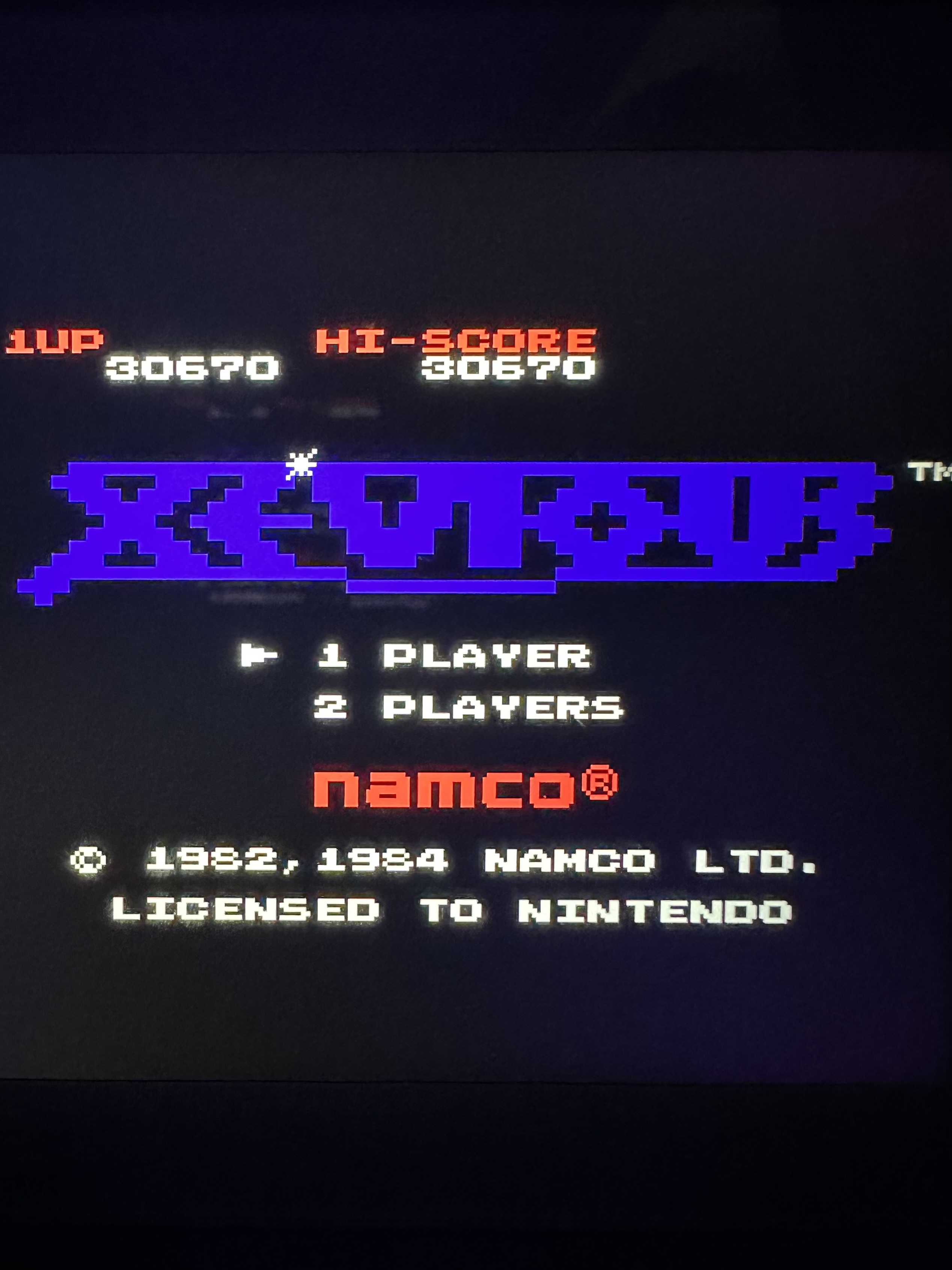
I’m testing it with Xevious for the Game Boy Advance. That mid-eighties arcade classic holds a special place in my heart as it was in the student rec room at Mansfield OSU when I was taking classes there, but I digress:

That’s not a very high score yet, but I just started playing it again.

The ability to play old games with new hardware has been a middle aged joy for me. Finding clever ways to enhance those games using features like save states just adds to their value.

Saturday, March 29, 2025

Beaten: Powerslave Exhumed (Saturn/One)

 I've been getting my fix of late 1990s first person shooters over the past few years, beating Marathon:Durandal and Quake for example, but when I saw that Powerslave Exhumed was available I had to get it, as the original Powerslave was one of my "unfinished business" games, which are games that I played in the past but never beat. 

I had purchased the Sega Saturn version of Powerslave in late 1996 as it beat the Playstation version to market for some reason. My purchase of the Sega Saturn at release in May of 1995 had proven to be a mistake once Sony released the Playstation later that year. By late 1996 Sony had clearly already vanquished the Saturn by having games like Wipeout, Resident Evil, and Tomb Raider out, so I felt that I needed to boost my Saturn library, and Powerslave sounded cool.

I cannot remember where I was stuck, but it might have been on the first boss, Set. So I downloaded Powerslave Exhumed, a modern port for consoles and PC created by Night Dive Studios that retains the graphics and gameplay of the original. Since the original was so good, that is a plus.

It's a first person shooter, sure, but also a first person platformer at times, getting both gameplay aspects right. The other awesome aspect of this game is it's "Metroidvania" style of progression, created well before that was a word, meaning that the player opens up areas as they go and those areas will require repeated visits once the player acquires new items. Some areas, for examples, have multiple exits with one of them on a high ledge, meaning the player needs to acquire a certain artifact to make the jump.

Powerslave was an Iron Maiden album before it was a game, with a cool ancient Egyptian theme, and the game Powerslave recreates that theme in each level. The levels are large and varied in theme, each with the standard 1990s keys and doors that must be acquired and used during each visit to that level. So the backtracking one does is not that easy, as each key needs to be reacquired and each door reopened, every time one goes through the level.

It's not frustrating, though, as the level design is absolutely awesome, making levels fun to revisit. The weapons keep coming throughout one's playthrough, and once acquired, they remain in one's inventory forever. Starting with a sword (great for underwater fish fights), the player gets a pistol, a large machine gun, a grenade, and then some interesting magical weapons like a snake staff, a fireball ring, and a lightning bolt spell before it's all done. 

Ammo drops from fallen enemies are generic, meaning that whatever weapon one is holding will get the ammo refilled. So if the player is low on machine gun ammo but was using the pistol to kill enemies and some ammo drops, the player must switch to the machine gun before picking up the ammo.

There are a few boss fights, and they are memorable and challenging, but there’s no health meters on these guys, so just keep shooting and moving. While Set gave me some trouble again (I almost gave up there again), I got the final boss on my first try.

The wave of first person shooters following Doom were often creative in their attempts to stand out in the crowd, but the under appreciated Powerslave had more going on in it than I realized back in late 1996. I’m glad the folks at Night Dive Studios released Powerslave Exhumed so I could wrap up that bit of unfinished business.


Friday, March 7, 2025

Beaten: Grand Theft Auto 3 The Definitive Edition (PS4)

There are lots of games I missed over the years, but in 2001 when Grand Theft Auto 3 landed on the Playstation 2, I was off in MMORPG land, playing Ultima Online, and not really paying attention to consoles anymore. Of course I heard about it from all sorts of media and from co-workers who were playing it, but I was too busy with UO and the fansite I had to take notice.

Not that third person open world traversal was all that new to me in gaming (Tail of the Sun on PS1), but the model was solidified with GTA 3. In its aftermath I enjoyed The Simpsons Hit and Run on the Gamecube and later Bully on the Wii before finally getting on board with Grand Theft Auto 4 in August of 2008 on my shiny new XBox 360. 

With the long wait for GTA 6 supposedly ending later this year, I decided to go back to the roots of all this mayhem with Grand Theft Auto 3 The Definitive Edition and just try it out to see if it could hook me. I could have gotten the PS2 version and played it as it was released, but the Definitive Edition has multiple graphic, control, and interface improvements that reduced the frustration of missions that require multiple attempts. The icing on the cake was playing it on my PS5, with load times reduced to seconds.

The core story and gameplay are all intact and GTA 3 reminded me of how much I love the chaos that sometimes comes with these games. The physics of how cars handle takes getting used to as they seem to be lighter than they should be and even a low speed collision can have silly physics consequences.

The story is about what I expected with the glaring exception of the player’s character being mute. It works as a storytelling device as the cast of criminal underworld characters gets to shine with their demands. Cut scenes are all made from the in-game engine and the blocky characters are good for 2001. Whatever level of upgrade they did graphically kept the 2001 look but polished it up really well. Performance is quick and smooth.

The missions that make up the main story are varied, with some on strict time limits. Normally these time limit missions frustrate me, but GTA 3 is so well designed that all it took for most of them are repeated tries once one figures out what to do. One such tight-on-time mission required the player to take out a series of taco stands across all three islands in under nine minutes. It felt impossible at first, but once I realized that they are in the same location during every attempt, it was matter of memorizing those locations, figuring out the most efficient route, and then trying it a few times until I got it right.

Another great design standard established in GTA 3 is the balance between exploration and story progress. By that I mean, if the player follows the story missions, they are introduced to enough of the map to understand the basics of traversal across the three islands and the waterways between them. For explorers like me, the rewards were great enough to give the maps a little more scrutiny. Players can find spawns of health restoring hearts, essential body armor, weapons, and hidden packages by checking out incredibly well-designed map.

The hidden packages were fun enough that I spent a little more time searching for them, and the reward granted for every 10 recovered - a weapon spawn at one' s hideouts - was also worthwhile. I got to about 82 of them, and in the searching I got to to the hidden area in the screenshot above. Other side missions were fun to varying degrees but I did not delve too deep into them.

I had so much fun playing this landmark game over the last month, which is so well made that even the frustrating parts - mostly time limit missions - were manageable and even fun to repeat. Like real life, even when you plan every detail out, running a mission in Grand Theft Auto The Definitive Edition can go a lot of unexpected and crazy ways that are usually so chaotic and silly that one can't help but laugh.